
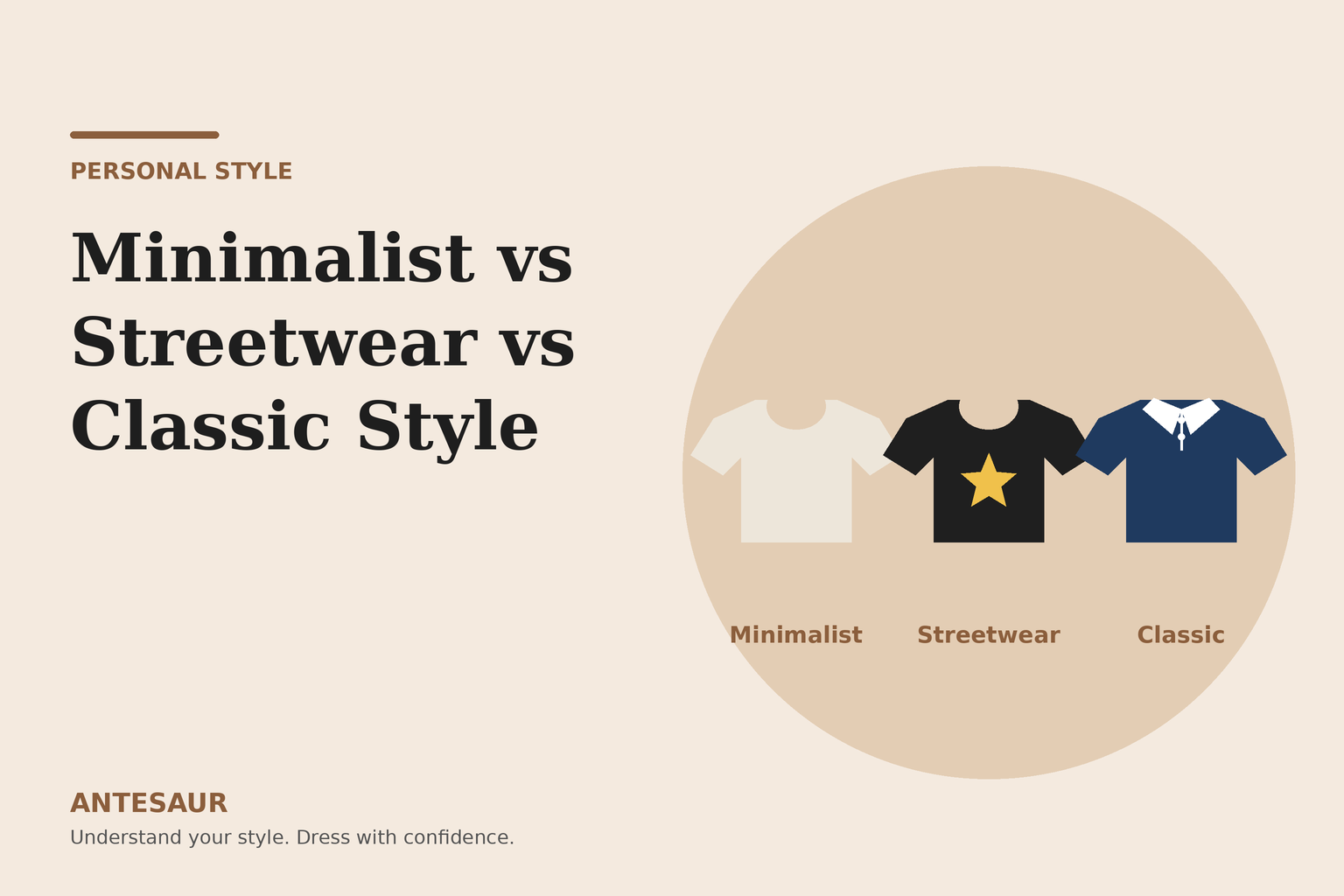
Open any fashion app or scroll through Instagram for five minutes and you will meet a dozen style labels: minimalist, streetwear, classic, preppy, boho, old money, athleisure and more. It is easy to feel that you must pick a team and stick with it. The truth is simpler. Most people dress in one of three broad directions, and almost every other label is a variation on those three.
In this guide, we compare minimalist, streetwear and classic style side by side. You will learn what each style looks like, what clothes define it, who it works best for, and how to figure out which one matches your lifestyle, budget and personality. If you want a broader starting point first, read our guide on how to find your personal style, then come back here to narrow things down.
Why Understanding Fashion Styles Matters
Knowing your style direction saves time, money and mental energy. When you understand the kind of clothes you are drawn to, shopping becomes faster because you stop buying random pieces that look good on a hanger but never match anything at home.
A clear direction also helps you build outfits that feel consistent. Instead of owning thirty items that do not work together, you end up with fifteen that do. That is the real benefit of understanding fashion styles: not to follow rules, but to make better choices with less effort.
What Is Minimalist Style?
Minimalist style is built on the idea of “less, but better.” The focus is on clean lines, simple shapes, quiet colours and quality fabrics. There are no loud prints, no big logos and no unnecessary details. The outfit looks calm and intentional.
Key Features of Minimalist Style
- Colour palette: White, black, grey, beige, navy, olive and other muted shades.
- Patterns: Mostly solid colours. If there is a pattern, it is usually a very subtle stripe or texture.
- Fit: Clean and well-proportioned. Not too tight, not too baggy.
- Details: Few or none. No heavy embroidery, no oversized graphics.
- Wardrobe size: Small but carefully chosen.
Typical Minimalist Outfits
For men, a minimalist outfit could be a plain white T-shirt, straight-fit dark trousers and clean white sneakers. For women, it could be a fitted black top, wide-leg trousers in a neutral shade and simple flat sandals. Add a leather watch or a thin chain and the look is complete.
Who Should Choose Minimalist Style?
Minimalist style suits people who like simplicity and want to spend less time deciding what to wear in the morning. It also works well for professionals who need a polished look without effort. If you enjoy a tidy wardrobe and neutral colours, you will probably feel at home here.
Pros and Cons
The biggest advantage is versatility. Almost everything in a minimalist wardrobe can be mixed with everything else. It also tends to look good for years because it does not depend on trends.
The downside is that it can feel boring if you love colour and expression. A minimalist wardrobe also depends heavily on fit and fabric quality, because with so few details, any mistake in fit becomes very visible. Our article on common fit mistakes that ruin an outfit is a useful companion if you lean this way.
What Is Streetwear Style?
Streetwear grew out of skate, hip-hop and urban youth culture, and today it is one of the most popular styles among students and young professionals in India and across the world. It is relaxed, expressive and comfort-first. Graphics, bold colours, layering and statement sneakers are common.
Key Features of Streetwear Style
- Colour palette: Anything goes. Black and white are common, but bright colours and contrast are welcome.
- Patterns and graphics: Printed T-shirts, hoodies with artwork, logos, slogans and bold typography.
- Fit: Loose, oversized or relaxed. Baggy jeans, cargo pants and boxy tees are typical.
- Footwear: Chunky sneakers, high-tops or clean trainers.
- Accessories: Caps, beanies, crossbody bags, chains and sunglasses.
Typical Streetwear Outfits
A classic streetwear outfit might be an oversized graphic T-shirt, relaxed-fit cargo pants and chunky sneakers, topped with a cap. In cooler weather, add a hoodie or a bomber jacket. If you are curious about the loose silhouette that defines this style, our comparison of oversized vs regular fit explains how to wear it without looking shapeless.
Who Should Choose Streetwear Style?
Streetwear suits people who value comfort, enjoy self-expression and like being a little different from the crowd. It is very popular in colleges and creative workplaces. It also suits anyone who enjoys sneakers, graphic tees and casual layering.
Pros and Cons
The main advantage is comfort and freedom. You can mix colours, play with proportions and show personality through your clothes. It is also easy to start with basics like a good T-shirt and jeans.
The downsides are that it can look messy if proportions are not balanced, and some streetwear pieces are expensive because of branding. It may also feel out of place in strict dress-code environments such as banks or formal offices.
What Is Classic Style?
Classic style is about timeless, polished clothing that never goes out of fashion. Think of well-fitted shirts, tailored trousers, blazers, crisp chinos, leather shoes and structured coats. It leans formal and refined, but it does not have to be stiff.
Key Features of Classic Style
- Colour palette: Navy, white, grey, camel, burgundy, forest green and other traditional shades.
- Patterns: Stripes, checks, small prints and solid colours.
- Fit: Tailored and neat. Shoulders, sleeves and trouser length are all carefully fitted.
- Fabrics: Cotton poplin, wool, linen, oxford and quality knits.
- Footwear: Loafers, derbies, oxfords, leather sneakers and ballet flats.
Typical Classic Outfits
For men, a light blue formal shirt, beige chinos, a brown leather belt and loafers is a perfect classic look. For women, a tailored blazer over a crisp white shirt with straight trousers and pointed flats works beautifully. A trench coat or a well-cut wool jacket finishes the look in colder months.
Who Should Choose Classic Style?
Classic style suits people who work in corporate or formal environments, or anyone who likes looking sharp and put together. It is also a smart choice if you prefer buying fewer, better pieces that last for many years.
Pros and Cons
The strength of classic style is its longevity. A well-made navy blazer or white shirt will stay useful for a decade. It also gives a professional, trustworthy impression in interviews, meetings and formal events.
The drawbacks are the cost of good tailoring and the risk of looking too formal in casual situations. Classic style also needs regular care, such as ironing, polishing shoes and dry cleaning.
Minimalist vs Streetwear vs Classic: Side-by-Side Comparison
Here is a quick comparison to help you see the differences at a glance.
| Feature | Minimalist | Streetwear | Classic |
| Main idea | Simple and clean | Expressive and relaxed | Polished and timeless |
| Colours | Neutral and muted | Bold, varied | Traditional, rich |
| Fit | Clean, balanced | Loose, oversized | Tailored, neat |
| Comfort level | High | Very high | Medium |
| Budget | Medium | Low to high | Medium to high |
| Best for | Everyday simplicity | Students, creatives | Office and formal use |
How to Decide Which Style Suits You
Use these four simple steps to find your direction.
Step 1: Look at Your Daily Routine
Think about where you spend most of your week. If you attend college or work from home, streetwear or minimalist clothes will be practical. If you commute to a corporate office, classic or smart minimalist will serve you better. Your wardrobe should first match your real life, not an Instagram mood board.
Step 2: Check What You Already Wear
Open your wardrobe and pull out the five items you wear most often. Look for patterns. Are they mostly plain and neutral? Are they graphic and loose? Or are they structured and tidy? Your existing habits already point to your natural style.
Step 3: Save Inspiration Pictures
Save ten to fifteen outfit photos that you love, from Pinterest, Instagram or anywhere else. Do not overthink it. After saving, look for common elements such as colours, fits and accessories. If most images are clean and simple, you are minimalist. Also If they are loud and layered, you are streetwear. If they are sharp and tailored, you are classic.
Step 4: Consider Your Body and Comfort
Style should make you feel good. If you hate tight clothes, a strict classic style may feel uncomfortable. If you dislike baggy clothes, streetwear might not feel right. Comfort is part of confidence, and confidence is what makes any style look good.
Can You Mix These Styles?
Absolutely. In fact, most well-dressed people do. Mixing styles creates a personal look that feels unique. Here are some easy combinations.
- Minimalist + Streetwear: A plain oversized T-shirt in a neutral colour with relaxed trousers and clean sneakers. You get comfort with a calm palette.
- Classic + Minimalist: A tailored white shirt with straight black trousers and simple loafers. Very sharp, very simple.
- Classic + Streetwear: A blazer over a graphic tee with jeans and sneakers. This is a popular smart-casual formula that works for cafes, college and casual office days.
The key is to keep one element dominant. If everything is loud, the outfit looks chaotic. If you pick one statement piece and keep the rest quiet, the look stays balanced.
Building a Wardrobe Around Your Style
Once you know your direction, build around a core set of pieces rather than buying trends.
For a minimalist wardrobe, focus on well-fitted basics in a limited colour palette. Our guide to wardrobe essentials everyone should own is a great checklist. For a streetwear wardrobe, invest in a few quality graphic tees, one good pair of baggy jeans and one pair of sneakers you love. For a classic wardrobe, start with a navy blazer, white and light blue shirts, chinos and one pair of leather shoes.
If you want to go one step further and keep your closet tight and flexible, read our capsule wardrobe guide for beginners.
Common Mistakes When Choosing a Style
Many people struggle because of a few avoidable errors.
- Copying influencers blindly. What suits someone else’s lifestyle, budget or body may not suit yours.
- Buying for the person you wish you were. If you never attend formal events, a closet full of suits is wasted money.
- Ignoring fit. Even the best style looks poor if the clothes do not fit properly.
- Following trends too fast. Trends change every season. Style stays with you.
- Having no colour plan. Random colours make it hard to mix and match.
For more on this, see our article on fashion mistakes most people make.
Frequently Asked Questions
Which fashion style is best for beginners?
Minimalist style is usually the easiest for beginners because it relies on simple, neutral pieces that all go together. You do not need to worry about matching complex patterns or bold colours.
Is streetwear only for young people?
No. Streetwear is popular with younger people, but it can be adapted for any age. Older wearers often choose cleaner versions with solid colours, good fabrics and sharper fits.
Is classic style too formal for everyday life?
Not at all. You can wear classic pieces in a relaxed way, for example a polo with chinos, or a knit sweater with dark jeans and leather sneakers. Classic does not always mean a full suit.
Can I follow more than one style at the same time?
Yes. Most people blend two styles. The easiest approach is to choose one main style and borrow a few elements from another.
How much money do I need to build a good wardrobe in any style?
You do not need a large budget. Focus on fit and versatility, buy fewer but better pieces, and add items slowly. A small, thoughtful wardrobe always beats a large, random one.
Final Thoughts
Minimalist, streetwear and classic styles are not competing teams. They are three useful starting points that help you understand your own taste. Minimalist offers calm and simplicity, streetwear offers comfort and expression, and classic offers polish and longevity.
The best style is the one that fits your life, makes you comfortable and helps you feel confident when you walk out the door. Start with the direction that feels most natural, experiment slowly, and let your wardrobe grow with you. Explore more guides in our Personal Style section to keep building your look.