
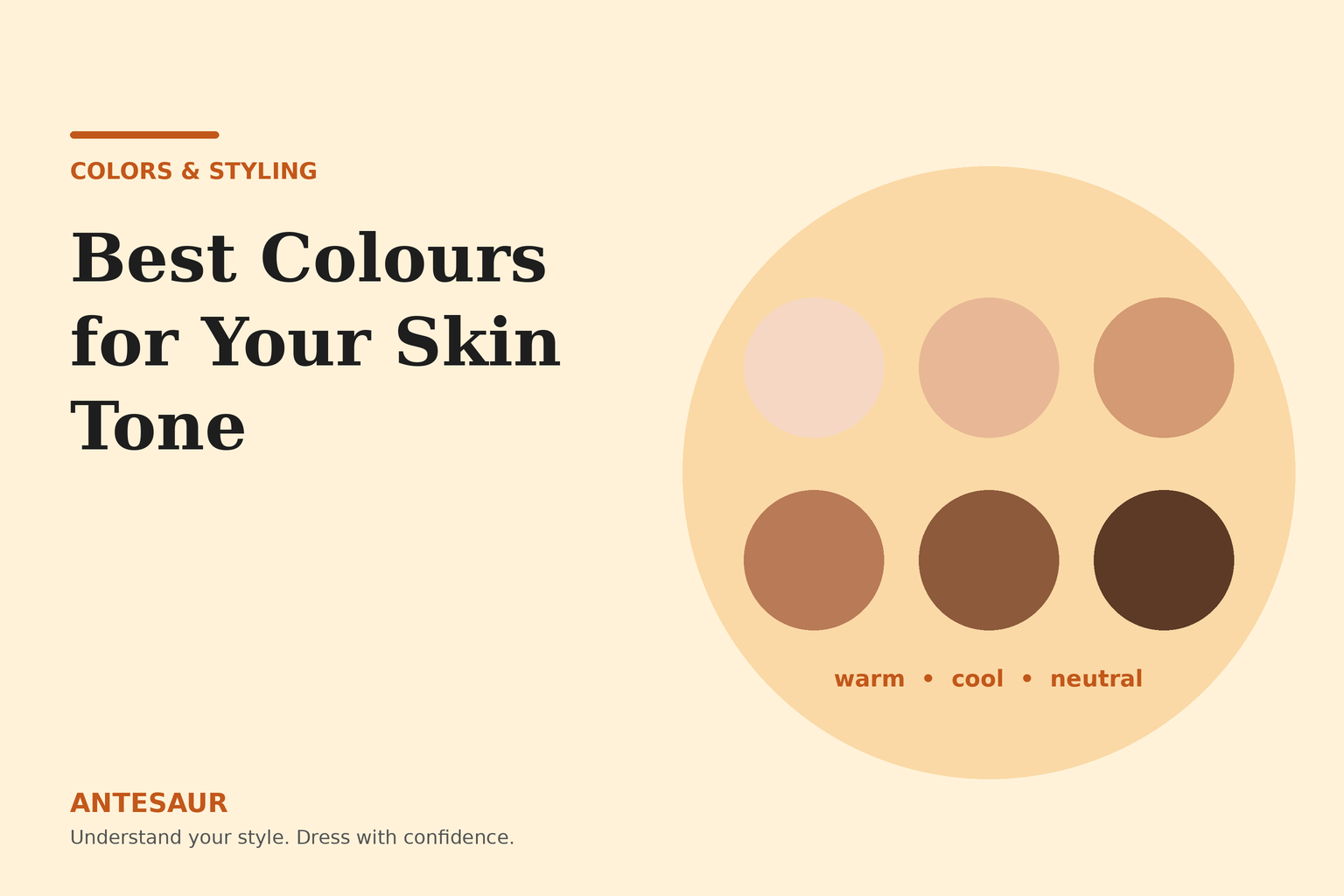
You have probably had this experience. You buy a shirt in a beautiful colour, but when you wear it, something feels off. Your face looks tired, dull or washed out. A friend wears the same colour and looks fantastic. The reason is not the shirt. It is the relationship between the colour and your skin tone.
Choosing colours that complement your skin can make you look fresh, healthy and confident without changing anything else. It is one of the simplest style upgrades. And the best part is that it does not depend on how fair or dark your skin is. Every skin tone looks great in the right colours.
In this guide, we explain how to find your skin tone and undertone, which colours suit warm, cool and neutral undertones, and how to dress well in colour if you have fair, wheatish, medium or deep skin. The advice is written with Indian skin tones in mind, but it applies to everyone.
Skin Tone vs Undertone: What Is the Difference?
These two terms are often mixed up, but they mean different things.
Skin tone is the surface colour of your skin, such as fair, wheatish, medium, olive, brown or deep. It can change with sun exposure.
Undertone is the subtle shade beneath the surface, which stays the same throughout your life. There are three main undertones: warm, cool and neutral.
Undertone matters more than surface tone when choosing clothing colours. Two people with the same depth of skin can have different undertones and look best in different colours.
How to Find Your Undertone
Try these simple tests. Use natural daylight if possible, and do not rely on only one test.
Test 1: The Vein Test
Look at the veins on the inside of your wrist in daylight.
- If they look green or olive, you likely have a warm undertone.
- If they look blue or purple, you likely have a cool undertone.
- If you cannot tell, or see a mix of both, you likely have a neutral undertone.
Test 2: The Jewellery Test
Hold gold and silver jewellery against your skin.
- If gold looks better and makes your skin glow, you are probably warm.
- If silver looks better, you are probably cool.
- If both look good, you are probably neutral.
Test 3: The White Paper Test
Hold a pure white sheet of paper next to your face without makeup.
- If your skin looks yellow, golden or peachy, you are probably warm.
- If your skin looks pink, red or bluish, you are probably cool.
- If it looks grey or olive, you may have a neutral or olive undertone.
Test 4: The Sun Test
Think about how your skin reacts to the sun.
- If you tan easily and rarely burn, you may be warm or neutral.
- If you burn easily and tan slowly, you may be cool.
Most Indian skin tones lean warm or neutral, but cool undertones also exist, especially among people with rosy or pinkish hints.
Best Colours for Warm Undertones
Warm undertones have golden, yellow, peachy or olive hints. Earthy, rich and sunny colours bring out the warmth.
Colours that usually suit:
- Olive green, moss green and forest green
- Mustard yellow and golden yellow
- Rust, terracotta and burnt orange
- Warm browns, camel and tan
- Cream and ivory instead of stark white
- Coral, peach and warm red
- Teal and warm turquoise
Colours to be careful with:
- Very icy pastels such as pale blue and lilac
- Stark, cold white
- Silver-grey tones that may look dull
Best Colours for Cool Undertones
Cool undertones have pink, red or blue hints. Jewel tones and crisp, clear colours usually look striking.
Colours that usually suit:
- Royal blue, navy and cobalt
- Emerald green and cool teal
- Burgundy, wine and cool red
- Purple, plum and lavender
- Pure white and soft grey
- Charcoal and black
- Cool pink and fuchsia
Colours to be careful with:
- Orange and mustard, which may clash
- Very yellow-based beiges
- Heavy gold tones, which can look unflattering
Best Colours for Neutral Undertones
Neutral undertones sit between warm and cool. This is the most flexible group, as you can wear many colours.
Colours that usually suit:
- Soft blues, teals and greens
- Dusty rose and mauve
- Medium greys and taupe
- Navy, burgundy and olive
- Off-white and cream
- Soft peach and coral
Colours to be careful with:
- Extremely neon or very harsh colours, which may overwhelm
- Colours that are too extreme in either warm or cool direction
If you have a neutral undertone, you can experiment freely and choose based on your personal taste.
Best Colours by Skin Depth
Along with undertone, the depth of your skin affects how colours appear. The right contrast can make your outfit stand out.
Fair Skin
Fair skin looks great in both soft and deep colours, but very pale shades can wash it out.
Good choices: Navy, burgundy, emerald, royal blue, charcoal, soft pink, dusty rose and deep teal.
Be careful with: Very light pastels and beige close to your skin colour, which may look flat.
Wheatish or Light Brown Skin
This is one of the most common Indian skin tones, and it is wonderfully versatile.
Good choices: Olive, mustard, maroon, teal, navy, coral, white, rust and sky blue.
Be careful with: Very pale yellow and beige that can blend with the skin.
Medium Brown or Olive Skin
This tone looks rich in earthy and jewel colours.
Good choices: Emerald green, deep red, orange-red, mustard, cobalt blue, burgundy, cream and white.
Be careful with: Muddy browns and dull greys that can reduce your natural glow.
Dark Brown or Deep Skin
Deep skin tones look stunning in bright, bold and rich colours.
Good choices: White, ivory, bright yellow, orange, royal blue, cobalt, emerald, fuchsia, red, lavender and pastel shades.
Be careful with: Colours very close to your skin tone, like dark brown or muddy olive, unless paired with a brighter accent.
Remember that these are suggestions. Personal taste, confidence and fit always matter more than strict colour rules.
How to Use This in Everyday Outfits
Knowing your best colours is useful only if you apply it. Here are a few practical ideas.
Tops Near the Face
The colour closest to your face has the greatest effect on how you look. Choose your best colours for shirts, T-shirts, kurtas, scarves and tops. If you like a colour that does not suit your undertone, wear it on the bottom half, such as trousers or shoes.
Mix With Neutrals
Neutral colours are your safety net. White, black, grey, navy and beige go with almost everything. Learn which neutrals suit your undertone best, such as cream for warm skin and pure white for cool skin. Our guide on neutral colours every wardrobe needs is a great starting point.
Build Colour Combinations
Pick one best colour and pair it with a neutral. For example, olive shirt with beige chinos for warm tones, or navy shirt with grey trousers for cool tones. For more combinations, see best colour combinations for everyday wear.
Use Accessories
If you love a colour that does not flatter you near your face, add it in accessories such as bags, belts, watch straps or socks. This lets you enjoy the colour without affecting your complexion.
Match T-Shirts and Jeans
When choosing T-shirts, think about how they interact with your jeans. Our article on how to match T-shirt colours with jeans gives simple pairings that work with most skin tones.
Do Black and White Suit Everyone?
Black and white are the most common colours in any wardrobe, but they do not suit all skin tones equally.
Black can look stunning on many skin tones, but it can look harsh on very fair or low-contrast complexions. If black near your face feels too heavy, soften it with a lighter scarf, collar or jewellery. For more ideas, read how to wear black without looking boring.
White looks fresh on most skin tones, especially medium and deep. If stark white feels cold on your skin, try off-white, ivory or cream, which are warmer.
How Hair and Eye Colour Play a Role
Natural hair and eye colour add to your overall colouring. Deep black hair and dark eyes make strong, saturated colours look rich. Lighter brown hair and eyes can look best with softer, earthy shades. If you colour your hair, choose a shade that matches your undertone, such as warm browns and golds for warm skin or ash and cool brown tones for cool skin.
Shopping for Colours Online
Online shopping makes colour harder to judge, because screens, lighting and photo editing change how shades look. Read the colour name carefully, check customer photos taken in daylight and compare the product with clothes you already own. If a shade looks borderline, choose the version that is slightly deeper or more muted, as these are generally easier to wear and look less harsh on camera and in real life.
Common Mistakes When Choosing Colours
- Following only trends. A trending colour is not always the best colour for you.
- Confusing skin tone with undertone. Two people with the same depth may need different colours.
- Judging in poor lighting. Test colours in daylight.
- Wearing colours close to skin tone near the face. They can wash you out.
- Believing you can only wear certain colours. Rules are guides, not restrictions.
- Ignoring the occasion. A great colour for you might still be wrong for a formal event.
You can find more everyday mistakes in our article on fashion mistakes most people make.
A Quick Test in the Mirror
If you are shopping and are not sure, do this simple test.
- Hold the clothing close to your face in natural light.
- Look at your skin. Does it look brighter, smoother and healthier, or does it look dull, tired and shadowed?
- Notice your eyes. Do they look brighter or dimmer?
- Ask a friend for an honest opinion.
If your face seems to light up, the colour is probably a good choice.
Frequently Asked Questions
How do I know my undertone quickly?
Try the vein test and the jewellery test together. If your veins look green and gold flatters you, you are likely warm. Also, If they look blue and silver flatters you, you are likely cool. If both work, you are probably neutral.
Which colours suit Indian skin tones the best?
Most Indian skin tones look good in rich, earthy and jewel colours such as olive, maroon, mustard, emerald, navy, teal and rust. Whites, creams and pastels also work well depending on undertone.
Can I wear colours that are not recommended for my undertone?
Yes. You can wear any colour you like, especially in accessories, bottoms or when paired with a more flattering colour near the face.
Does dark skin suit bright colours?
Yes. Deep skin tones look great in bold, bright and saturated colours such as yellow, orange, royal blue and fuchsia, as well as in pure white.
Does my undertone change with age or tanning?
Your undertone generally stays the same, but your surface skin tone can change with sun exposure and age. If you are unsure, test your colours again in natural light.
Final Thoughts
Choosing colours that suit your skin tone is one of the quickest ways to look better. Find your undertone, understand which colours bring out your glow and use neutrals to balance your outfits. Start with a few flattering shirts or kurtas and see how people respond.
Most importantly, wear colours that make you feel good. Confidence is the best colour you can wear. To learn more, explore our Colors & Styling guides.