Introduction
You can wear expensive clothing, premium fabrics, and the latest fashion trends, but if your clothes don’t fit properly, your outfit will never look its best. Fit is the foundation of great style. It affects how your clothes sit on your body, how comfortable you feel, and the overall impression you create.
Many people focus on colours, brands, or accessories while overlooking one of the biggest style factors: the fit of their clothing. A shirt that’s too tight, jeans that are too long, or a jacket with oversized shoulders can make even a high-quality outfit appear untidy.
The good news is that most fit mistakes are easy to avoid once you know what to look for. By understanding how different garments should fit and learning the most common sizing errors, you can instantly improve your wardrobe without spending more money.
In this complete guide, you’ll discover the most common fit mistakes that ruin an outfit, learn how to identify them, and get practical tips to ensure every outfit looks clean, balanced, and stylish.
Why Fit Is More Important Than Brand
A perfectly fitted basic T-shirt often looks better than an expensive designer shirt that doesn’t fit correctly.
Fit determines:
- Your body proportions
- Overall comfort
- Confidence
- Professional appearance
- First impressions
Instead of buying expensive clothes, invest in clothing that fits your body properly.
A simple, well-fitted outfit will almost always look more stylish than an expensive outfit with poor proportions.
How Proper Fit Improves Your Appearance
Good fit creates visual balance.
When clothing fits correctly, it:
- Makes your body look more proportionate
- Improves posture
- Creates cleaner lines
- Increases confidence
- Makes outfits look more premium
Properly fitted clothing also feels better throughout the day, allowing you to move naturally without discomfort.
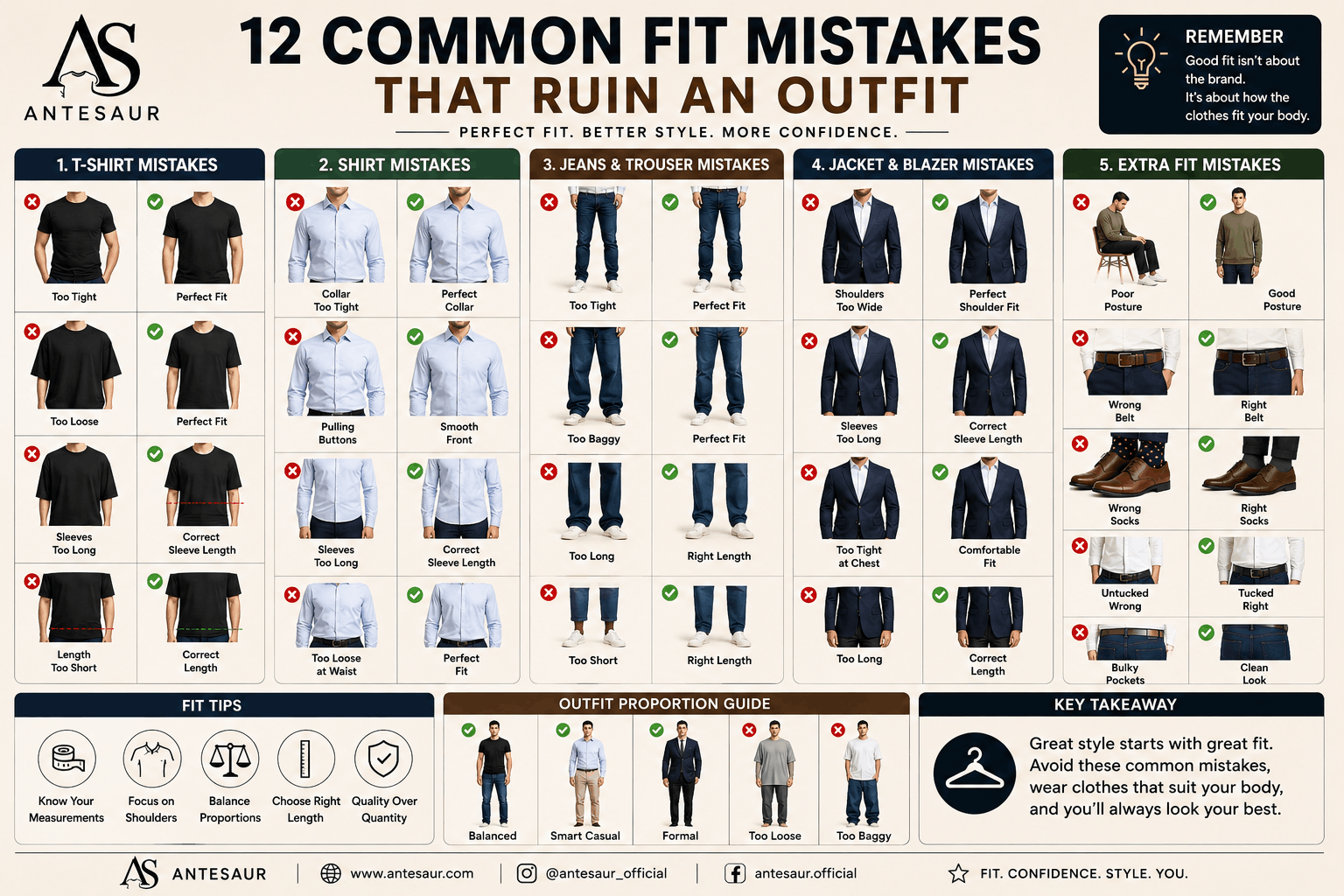
Common T-Shirt Fit Mistakes
T-shirts are everyday essentials, but they’re also one of the most commonly misfitted garments.
Wearing the Wrong Size
Many people buy one size too small or too large without checking the brand’s size chart.
A correctly sized T-shirt should:
- Sit naturally on the shoulders
- Feel comfortable around the chest
- Allow free movement
- End around the middle of the trouser zipper
Never rely only on S, M, L, or XL labels.
Tight Sleeves
Sleeves should gently hug your arms without restricting movement.
Extremely tight sleeves can make the T-shirt look uncomfortable.
Sleeves That Are Too Long
Excessively long sleeves can make your arms appear shorter and create an unbalanced silhouette.
For regular-fit T-shirts, sleeves should end around the middle of the upper arm.
Poor Shoulder Alignment
The shoulder seam should align closely with your natural shoulder.
If it falls too far down the arm, the T-shirt is too large.
If it sits inside your shoulder, it’s too small.
Incorrect Body Length
A T-shirt that’s too short may expose your waist when raising your arms.
A T-shirt that’s too long can make your legs appear shorter.
Choose a length that ends around the middle of your zipper area.
Common Shirt Fit Mistakes
Button-up shirts require even greater attention to fit.
Tight Collar
You should comfortably fit one or two fingers between your neck and the collar.
A collar that’s too tight feels uncomfortable and looks restrictive.
Pulling Buttons
If buttons stretch across your chest or stomach, the shirt is too small.
This creates an untidy appearance and reduces comfort.
Loose Waist
A shirt that’s excessively loose around the waist can hide your body shape and look oversized.
Choose a fit that follows your body naturally without being tight.
Sleeve Length Issues
Shirt cuffs should end near your wrist bone.
Sleeves that are too short or too long affect the overall balance of your outfit.
Common Jeans and Trouser Fit Mistakes
Bottom wear plays a major role in creating balanced proportions.
Wearing Extremely Skinny Jeans
Overly tight jeans can restrict movement and throw off the balance of your outfit.
Choose a fit that complements your body type rather than following short-lived trends.
Wearing Excessively Baggy Pants
Very loose trousers can overwhelm your frame and make your outfit appear untidy.
Aim for a comfortable fit with clean lines.
Incorrect Trouser Length
Jeans that bunch heavily around your shoes create a messy appearance.
The ideal trouser length should rest lightly on your footwear without excessive stacking.
Low-Rise Waist Problems
Very low-rise trousers may expose your waistband when sitting or bending.
A mid-rise waist offers a more balanced and comfortable fit.
Common Jacket and Blazer Fit Mistakes
A well-fitted jacket or blazer instantly elevates your outfit. However, even an expensive jacket can look awkward if the fit isn’t right.
Oversized Shoulders
The shoulder seam should end exactly where your natural shoulder ends.
If the shoulders extend beyond your body, the jacket appears too large and loses its structured look.
Tight Chest Area
When buttoned, your jacket should feel comfortable without pulling across the chest.
If you notice wrinkles radiating from the button, the jacket is too tight.
Sleeves That Are Too Long
Blazer sleeves should end near your wrist bone.
Ideally, about 0.5 inch (1–1.5 cm) of your shirt cuff should be visible for a polished appearance.
Jacket Length That’s Too Short or Too Long
A jacket should generally cover your seat while maintaining balanced body proportions.
A jacket that’s too short looks cropped, while one that’s too long can make your legs appear shorter.
How Body Type Affects Clothing Fit
Every body type benefits from different fits. Understanding your proportions helps you choose clothing that looks natural and comfortable.
Slim Body Type
Best choices:
- Slim Fit
- Regular Fit
Avoid extremely oversized clothing that can overwhelm your frame.
Athletic Body Type
Broad shoulders and a defined chest work well with:
- Slim Fit
- Regular Fit
- Relaxed Fit
Avoid clothing that restricts shoulder movement.
Broad Body Type
Choose:
- Regular Fit
- Relaxed Fit
Avoid clothing that’s either too tight or excessively baggy.
Balanced proportions always look better.
Short Height
To create a taller appearance:
- Wear properly fitted clothing.
- Avoid extra-long T-shirts.
- Choose straight or slim trousers.
- Avoid oversized layers.
Tall Height
Tall individuals can experiment with:
- Slim Fit
- Relaxed Fit
- Oversized Fit
Focus on balanced proportions rather than simply following trends.
Common Fit Mistakes Men Make
Men often make small fit mistakes that significantly affect their overall appearance.
Buying Clothes One Size Larger
Many people assume bigger equals more comfortable.
Instead, oversized clothing can make your body look less defined.
Choose your correct size instead.
Wearing Pants Too Low
Very low-rise trousers can disrupt body proportions and reduce comfort.
Mid-rise trousers are a more versatile and flattering option.
Ignoring Sleeve Length
Sleeves that are too long or too short immediately affect the overall appearance of a shirt or blazer.
Always check sleeve length before purchasing.
Wearing Baggy Formal Shirts
An oversized dress shirt can look untidy under a blazer.
Choose a regular or slim fit that follows your body’s natural shape.
Common Fit Mistakes Women Make
Women also benefit from paying attention to garment proportions.
Choosing the Wrong Waist Placement
High-rise, mid-rise, and low-rise bottoms all create different visual effects.
Select the rise that complements your body shape and provides comfort.
Wearing Tops That Are Too Long
Long tops paired with shorter legs can make the body appear less balanced.
Choose lengths that suit your height and outfit.
Ignoring Shoulder Fit
Even relaxed styles should have well-positioned shoulder seams.
Poor shoulder fit can make an outfit appear oversized or ill-fitting.
Wearing the Wrong Sleeve Length
Sleeves that are too long can hide your hands, while sleeves that are too short may look awkward.
Correct sleeve length contributes to a cleaner silhouette.
Expert Tips to Improve Every Outfit
Improving your style doesn’t always require buying new clothes. Small adjustments in fit can make a noticeable difference.
Know Your Measurements
Measure your:
- Chest
- Shoulders
- Waist
- Hips
- Inseam
Keep these measurements handy when shopping online.
Try Clothes Before Buying
Whenever possible:
- Walk
- Sit
- Raise your arms
- Bend slightly
This helps you check comfort and movement before making a purchase.
Pay Attention to Fabric
Different fabrics drape differently.
Choose quality materials such as:
- Cotton
- Linen
- Cotton Blends
- Wool (for formal wear)
These fabrics generally provide better structure and comfort.
Build Around Basics
A wardrobe built on well-fitting basics is more versatile than one filled with trend-driven pieces.
Essentials include:
- White T-shirt
- Black T-shirt
- Blue Jeans
- Beige Chinos
- White Sneakers
- Neutral Overshirt
Outfit Proportion Rules
Following a few simple proportion rules can make almost any outfit look more balanced.
Balance Slim and Relaxed Fits
Pair a relaxed-fit top with straight or slim bottoms.
Pair a slim-fit top with trousers that complement the silhouette without being overly tight.
Match Clothing to the Occasion
Different settings call for different fits.
Choose slim or tailored fits for professional environments and relaxed fits for casual outings.
Keep Lengths Balanced
Ensure that:
- Tops are not excessively long.
- Trouser hems rest neatly on your shoes.
- Jackets complement your height.
Balanced lengths help create a polished appearance.
Prioritize Comfort
If clothing feels restrictive or awkward, it’s unlikely to look its best.
The right fit should support both comfort and confidence.
Common Fit Mistakes Checklist
Before buying or wearing an outfit, use this checklist to make sure everything fits correctly.
T-Shirt Checklist
- ✅ Shoulder seams align with your natural shoulders.
- ✅ Chest feels comfortable without pulling.
- ✅ Sleeves end around the middle of your upper arm.
- ✅ Body length reaches around the middle of your trouser zipper.
- ✅ Collar sits comfortably around your neck.
Shirt Checklist
- ✅ Collar allows one or two fingers of space.
- ✅ Buttons don’t pull across the chest or stomach.
- ✅ Shoulder seams sit correctly.
- ✅ Sleeve cuffs end at your wrist bone.
- ✅ Shirt length works tucked in or untucked.
Jeans & Trouser Checklist
- ✅ Waist fits comfortably without a belt being essential.
- ✅ Rise suits your body type.
- ✅ Legs aren’t too tight or too loose.
- ✅ Trouser hem rests neatly on your shoes.
- ✅ Fabric allows comfortable movement.
Jacket Checklist
- ✅ Shoulders fit perfectly.
- ✅ Sleeves show a small portion of your shirt cuff.
- ✅ Jacket buttons comfortably.
- ✅ Jacket length covers your seat.
- ✅ Movement feels natural.
Best Practices
| Do | Don’t |
|---|---|
| Measure yourself before shopping | Guess your size |
| Check the brand’s size chart | Assume every brand fits the same |
| Prioritize shoulder fit | Ignore shoulder alignment |
| Buy clothes that suit your body type | Follow every fashion trend blindly |
| Balance slim and relaxed pieces | Wear everything oversized or everything tight |
| Try clothes before purchasing | Buy only based on appearance |
| Invest in quality fabrics | Focus only on logos or branding |
Real-Life Outfit Examples
Example 1: Office Professional
A light blue regular-fit shirt paired with navy trousers and brown loafers creates a polished business-casual outfit. The shirt fits neatly across the shoulders and chest, while the trousers break cleanly over the shoes.
Example 2: Weekend Casual
A relaxed-fit beige T-shirt with straight-fit blue jeans and white sneakers offers comfort without looking oversized. The balanced proportions keep the outfit modern and effortless.
Example 3: Smart Casual Dinner
A slim-fit black polo, beige chinos, and leather loafers create a clean and sophisticated look. The fitted polo complements the tailored trousers without appearing too tight.
Example 4: Travel Outfit
A relaxed-fit hoodie, joggers, and comfortable sneakers provide ease of movement during long journeys while maintaining a stylish appearance.
Example 5: Everyday Street Style
An oversized T-shirt paired with straight-fit cargo pants and classic sneakers creates a trendy streetwear look. The proportions remain balanced because only the top has extra volume.
Expert Styling Advice
Fit Comes Before Fashion
No trend can replace proper fit. Clothing that fits well will almost always look more stylish than expensive designer pieces with poor proportions.
Tailoring Makes a Difference
Small alterations such as shortening sleeves, adjusting trouser hems, or taking in the waist can significantly improve how clothing looks and feels.
Dress for Your Body Type
Instead of copying every trend, choose clothing that complements your height, build, and proportions.
Understanding your body type helps you make smarter style decisions.
Keep Your Wardrobe Simple
A collection of well-fitting basics is more practical than a wardrobe full of trendy items that don’t suit you.
Build around timeless essentials and add seasonal pieces when needed.
How to Build a Better-Fitting Wardrobe
Creating a wardrobe with the right fit doesn’t require replacing everything at once.
Start with these essentials:
- White Crew Neck T-Shirt
- Black Crew Neck T-Shirt
- Navy Polo Shirt
- Light Blue Oxford Shirt
- Straight-Fit Blue Jeans
- Beige Chinos
- White Sneakers
- Black Leather Shoes
- Neutral Overshirt
- Lightweight Jacket
Each item should fit properly at the shoulders, chest, waist, and length.
This foundation allows you to create versatile outfits for almost any occasion.
Professional Dressing Tips
For work and formal occasions:
- Choose regular or slim-fit shirts.
- Ensure trousers have the correct length.
- Wear jackets with structured shoulders.
- Keep shoes clean and polished.
- Avoid clothing that’s too tight or excessively loose.
Professional dressing is about clean proportions, quality fabrics, and confidence rather than expensive brands.
Frequently Asked Questions (FAQs)
1. Why is clothing fit more important than the brand?
Even premium brands won’t look good if the clothing doesn’t fit properly. A well-fitted basic outfit almost always looks better than an expensive outfit with poor proportions.
2. What’s the biggest fit mistake people make?
The most common mistake is buying clothes based only on the size label instead of checking measurements and trying them on.
3. How should a T-shirt fit?
A properly fitted T-shirt should:
- Sit naturally on your shoulders
- Feel comfortable around the chest
- Allow free movement
- Have sleeves ending around the middle of your upper arm
- End around the middle of your trouser zipper
4. How should jeans fit?
Jeans should fit comfortably around the waist without feeling too tight or requiring a belt to stay up. The length should rest neatly on your shoes without excessive bunching.
5. Can oversized clothing ruin an outfit?
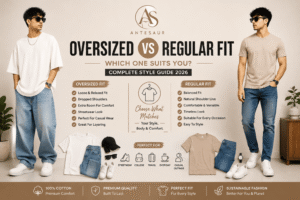
Oversized clothing can look stylish when it’s intentionally designed and balanced with the rest of the outfit. Wearing clothes that are simply too large often creates an untidy appearance.
6. Should shirts always be slim fit?
No.
Choose the fit based on your body type and the occasion. Regular fit and relaxed fit can look just as stylish when they fit correctly.
7. How do I know if my jacket fits properly?
A well-fitted jacket should have:
- Perfect shoulder alignment
- Comfortable chest room
- Sleeves ending near the wrist bone
- Length covering the seat
- Easy movement when buttoned
8. Is tailoring worth it?
Yes.
Simple alterations like shortening sleeves or adjusting trouser hems can dramatically improve how clothing fits and looks.
9. Does body type affect clothing fit?
Absolutely.
Your height, build, shoulder width, and proportions all influence which clothing fits and styles look best.
10. Can improving fit make me look more stylish?
Yes.
Proper fit improves proportions, posture, comfort, and confidence. It’s one of the easiest ways to elevate your overall style without spending more money.
Fit Mistakes Checklist
Before leaving home, ask yourself:
- ✅ Do the shoulder seams align correctly?
- ✅ Is the chest comfortable without pulling?
- ✅ Are the sleeves the right length?
- ✅ Does the body length look balanced?
- ✅ Do my trousers break neatly over my shoes?
- ✅ Is my jacket comfortable when buttoned?
- ✅ Does the outfit match the occasion?
If most answers are Yes, your outfit is likely well-balanced.
Myth vs Reality
| Myth | Reality |
|---|---|
| Expensive clothes always look better. | Proper fit has a bigger impact than the brand name. |
| Bigger clothes are more comfortable. | The correct size provides the best balance of comfort and appearance. |
| Slim fit means skin-tight clothing. | Slim fit should be tailored, not restrictive. |
| Oversized means buying two sizes larger. | True oversized clothing is designed with different proportions. |
| Tailoring is only for formal wear. | Basic alterations improve the fit of almost any garment. |
Final Thoughts
The difference between an average outfit and a great outfit often comes down to one simple factor—fit. Whether you’re wearing a basic T-shirt, a formal shirt, jeans, or a blazer, the right fit creates cleaner proportions, improves comfort, and enhances your overall appearance.
Instead of chasing every fashion trend, focus on building a wardrobe filled with clothes that fit your body properly. Pay attention to shoulder alignment, sleeve length, body length, and fabric quality. If needed, don’t hesitate to make small alterations, as tailoring can transform an ordinary garment into one that feels custom-made.
Looking stylish isn’t about spending more money—it’s about wearing clothes that fit you well and suit your lifestyle.
Key Takeaways
- Fit is more important than brand.
- Shoulder alignment is the first thing to check.
- Avoid clothing that’s too tight or excessively loose.
- Balance proportions between tops and bottoms.
- Choose the right fit for the occasion.
- Invest in quality basics with proper fit.
- Consider tailoring for a cleaner, more polished look.