Why does a shirt look perfect on one person and awkward on another, even when both are the same size? The answer is body shape. Clothes are designed in flat patterns, but bodies have curves, angles and proportions that interact with fabric in different ways. When you understand your body type, you can choose clothes that work with your shape instead of against it.
This is not about changing your body or following strict rules. It is about knowing which cuts, fits and details help you feel comfortable and look balanced. In this guide, we explain the main body types for women and men, give practical clothing suggestions for each and share universal tips that apply to everyone.
First, a Quick Note on Body Types
Body type categories are simply helpful starting points. Real bodies are varied, and most people fall somewhere between two types. Treat these descriptions as tools, not labels. If a suggestion feels uncomfortable or does not match your taste, you are free to ignore it.
Also remember that every body is a good body. The aim of dressing for your shape is to feel confident and comfortable, not to hide or fix anything.
How to Find Your Body Type
You can estimate your body type with a mirror and a measuring tape.
- Measure your shoulders at the widest point.
- Measure your chest or bust around the fullest part.
- Measure your waist at the narrowest part of your torso, usually just above the belly button.
- Measure your hips around the widest part.
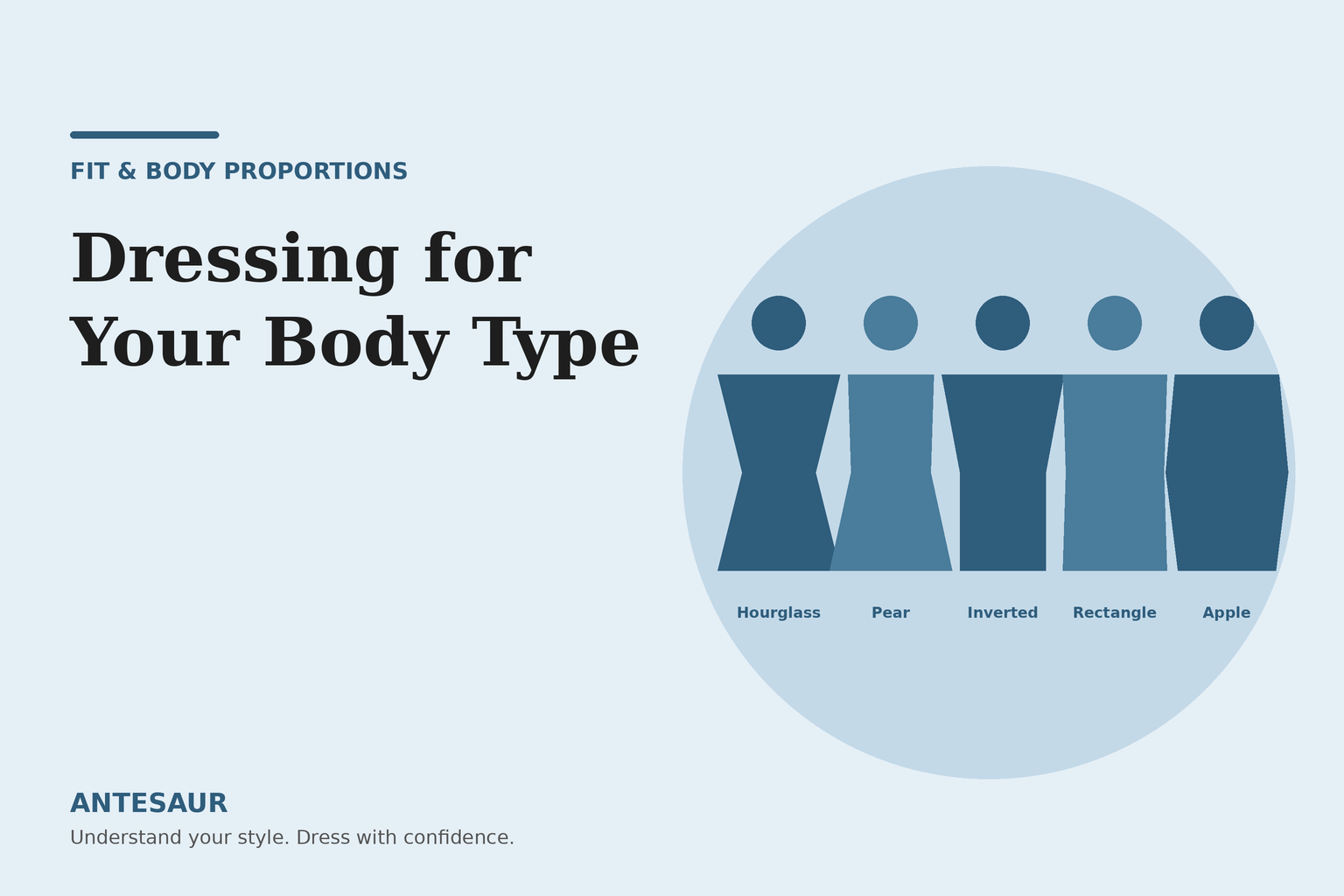
Compare the numbers. If shoulders and hips are similar with a defined waist, you are likely an hourglass. Also If hips are wider than shoulders, you are a pear. If shoulders are wider than hips, you are an inverted triangle or athletic. Also If everything is roughly the same, you are a rectangle. If you carry more weight around the middle, you are an apple or round shape.
Body Types for Women and How to Dress Them
Hourglass
Features: Shoulders and hips are about the same width, with a clearly defined waist.
What works:
- Fitted or wrap tops and dresses that show the waist
- High-waisted trousers and skirts
- Belted jackets and coats
- Soft, stretchy fabrics that follow curves
What to be careful with: Boxy, shapeless clothes can hide your waist. Very stiff fabrics may feel restrictive.
Pear (Triangle)
Features: Hips are wider than the shoulders and bust. The waist is usually defined.
What works:
- Tops with details at the shoulders, such as puff sleeves, boat necklines or structured shoulders
- Brighter or lighter colours on top, darker shades on the bottom
- A-line skirts and dresses
- Straight-leg or bootcut trousers
- Structured blazers that end at the hip
What to be careful with: Tight, clingy fabrics on the hips and very low-rise bottoms.
Inverted Triangle
Features: Shoulders and bust are wider than the hips.
What works:
- Softer necklines like V-necks and scoop necks
- Wide-leg trousers, flared skirts and A-line dresses to add volume at the bottom
- Light or patterned bottoms to balance the top
- Raglan or dolman sleeves that soften the shoulder line
What to be careful with: Heavy shoulder pads, big puff sleeves and very strong horizontal stripes on top.
Rectangle
Features: Shoulders, waist and hips are close in width. There is less natural waist definition.
What works:
- Belts, wrap styles and peplum tops that create a waist
- Layered outfits that add shape
- Ruffles, textures and patterns that add curves
- High-waisted bottoms with tucked-in tops
What to be careful with: Very straight, shapeless dresses with no waist detail.
Apple (Round)
Features: The midsection is fuller, with slimmer legs and arms.
What works:
- Empire-waist tops and dresses that flow from under the bust
- V-necklines that elongate the torso
- Straight-leg trousers and structured jackets
- Fabrics that drape rather than cling
- Showing off your legs with knee-length skirts and dresses
What to be careful with: Very tight waistbands and clingy fabrics around the stomach.
Body Types for Men and How to Dress Them
Rectangle (Average Build)
Features: Shoulders, chest, waist and hips are relatively even.
What works:
- Layering with jackets, overshirts and sweaters to add structure
- Textured fabrics such as knits and corduroy
- Structured blazers
- Slim or straight-fit trousers
What to be careful with: Very boxy, shapeless clothes that make you look straight up and down.
Triangle (Pear)
Features: Narrower shoulders with a wider waist or hips.
What works:
- Structured shoulders in jackets and blazers
- Patterns, stripes and brighter colours on top
- Darker, plain trousers with a straight cut
- Fitted but not tight shirts
What to be careful with: Tight T-shirts around the midsection and tapered trousers that emphasise the hips.
Inverted Triangle (Athletic)
Features: Broad shoulders and chest with a narrower waist.
What works:
- Shirts and T-shirts that fit well in the chest without pulling
- Straight or relaxed-fit trousers that give the lower body more volume
- Simple, unpadded jackets
- Crew and V-neck T-shirts
What to be careful with: Very tight sleeves, heavy shoulder padding and overly skinny jeans that exaggerate the contrast.
Oval (Round)
Features: A rounder midsection with narrower shoulders and legs.
What works:
- Dark, solid colours and vertical lines
- Open jackets and unbuttoned overshirts
- Straight-leg trousers with a comfortable mid-rise
- Properly sized shirts, neither too tight nor too loose
What to be careful with: Clothes that are too tight across the stomach, as well as very baggy items that add visual volume.
Slim or Lean Build
Features: A narrow frame with slim arms and legs.
What works:
- Layering, such as shirt plus sweater plus jacket, to add dimension
- Textured fabrics like denim, tweed and flannel
- Straight or regular-fit trousers instead of extra-skinny ones
- Horizontal stripes and structured shoulders
What to be careful with: Extremely baggy clothes that make you appear lost in the fabric.
Universal Rules That Work for Every Body Type
No matter your shape, a few ideas always help.
Get the Fit Right First
Fit is more important than any body-type rule. Check that shoulders sit correctly, sleeves end at the right point and trousers fit your waist and hips without pulling. Our guide on common fit mistakes that ruin an outfit is a great checklist.
Understand Different Fits
Slim, regular and relaxed fits create different effects. A slim fit follows your shape closely, while a relaxed fit adds ease. Learn how they differ in our article on slim fit vs relaxed fit, and explore oversized vs regular fit if you like looser silhouettes.
Balance Your Proportions
If you wear a loose top, pair it with a more fitted bottom. If your bottom is wide, keep the top more structured. This simple trade-off keeps the outfit from looking shapeless.
Use Colour Wisely
Darker colours tend to recede, and lighter or brighter colours draw attention. You can use this idea to highlight areas you like and keep the focus softer where you prefer. For ideas on mixing shades, see best colour combinations for everyday wear.
Pay Attention to Fabric
Fabric affects shape. Stiff fabrics add structure, soft fabrics drape and stretch fabrics follow your curves. Avoid fabrics that are too thin, too clingy or too stiff for your comfort.
Choose Necklines and Collars Carefully
Necklines frame your face and upper body. V-necks elongate, crew necks add width and boat necks broaden the shoulders. Choose the one that supports the look you want.
Accessories and Layering for Balance
Accessories can adjust proportions without changing your clothes.
- Belts: Define the waist and break up long lines.
- Scarves and stoles: Add width at the neckline and shoulders.
- Bags and backpacks: Pick a size that suits your frame. Oversized bags can overwhelm smaller bodies.
- Jackets and cardigans: Add structure and shape. Choose lengths that sit at your hip or just below.
- Watches and jewellery: Scale them to your frame, with bigger pieces for broader builds and slimmer ones for smaller frames.
Dressing Comfortably During Weight Changes
Bodies change over time because of age, fitness or lifestyle. Rather than buying many clothes at once, build a flexible wardrobe with stretch fabrics, adjustable waistbands and wrap styles. Keep clothes that fit you right now, and avoid forcing yourself into old sizes. Your wardrobe should support your current life.
Using Prints and Patterns to Your Advantage
Prints can also help you balance your shape. Place bolder or larger patterns on the area you want to highlight, and keep plain, darker colours on the area you prefer to soften. Vertical stripes create length, while small, even patterns suit most body types without overwhelming them. Very large prints can overpower a smaller frame, and very tiny prints may look busy on a larger frame. When in doubt, hold the garment against yourself in the mirror and check whether it supports your overall proportions.
Common Body-Type Dressing Mistakes
- Following rules too strictly. Rules are guides, not laws. Try things and see what feels good.
- Hiding in oversized clothes. Extremely baggy clothes rarely flatter anyone.
- Buying the wrong size to feel better. Tight clothes look uncomfortable and loose clothes look careless. Pick the right size, whatever the number says.
- Ignoring comfort. If you are constantly adjusting your outfit, it will not look confident.
- Copying celebrity outfits. Their bodies, stylists and tailors are different from yours.
For more on common errors, read our list of fashion mistakes most people make.
Building a Body-Friendly Wardrobe
Start with a few essentials that fit you perfectly and work for your shape. Our list of wardrobe essentials everyone should own is a good base. Then add pieces that highlight the features you like. Visit a tailor for small changes so your clothes follow your body well.
A simple plan:
- Identify your general body type and note two or three styles that feel comfortable.
- Buy basics in those styles, in a neutral colour palette.
- Add layers and accessories that balance your proportions.
- Try new items gradually, and keep notes about what works.
Frequently Asked Questions
How do I know my body type?
Measure your shoulders, bust or chest, waist and hips. Compare them to see which areas are wider or narrower. You can also stand in front of a mirror in fitted clothes to see your natural shape.
Do I have to follow body type rules?
No. They are helpful suggestions, but personal taste and comfort matter most. If you like something and feel great in it, wear it.
Can men also dress for body type?
Yes. Men also have different builds, such as rectangle, triangle, inverted triangle, oval and lean. Fit, layering and structure play a big role in making clothes look good for each.
What if I fit into more than one body type?
Many people do. Use suggestions from both types and focus on what feels comfortable and looks balanced to you.
What is the single most important tip?
Get the fit right. Clothes that fit your shoulders, waist and length properly always look better than expensive clothes that do not.
Final Thoughts
Dressing for your body type is about understanding your shape and choosing clothes that support it. When proportions are balanced and fit is correct, almost any outfit can look good.
Use this guide as a starting point, experiment with different cuts and trust your own comfort and taste. Over time, you will naturally learn what works for you. Continue exploring our Fit & Body Proportions section for more practical styling help.