Glasses are one of the few accessories you wear every single day, and they sit right in the middle of your face. That means the wrong pair can make you look tired or uncomfortable, while the right pair can sharpen your features, add personality and make you look more confident.
Many people choose glasses in a hurry: they pick whatever looks good on the display stand or whatever is in budget. Later, they realise the frames feel too wide, slide down the nose or do not match their face. The easiest way to avoid this is to understand how frame shapes interact with face shapes.
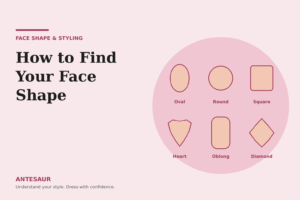
This guide explains which glasses frames work well for oval, round, square, heart, oblong and diamond faces, how to pick the right size, colour and material, and which mistakes to avoid. If you do not know your face shape yet, read our guide on how to find your face shape first.
The Golden Rule: Contrast and Balance
The simplest way to choose frames is through contrast. Your frames should contrast with the shape of your face, not copy it. For example:
- Angular faces look balanced with softer, rounder frames.
- Round faces look balanced with angular or geometric frames.
- Long faces look balanced with wider, deeper frames.
- Wide faces look balanced with slimmer, narrower frames.
This is a helpful starting point, but it is not a strict law. Your skin tone, hairstyle, personal style and comfort also matter.
Frame Shapes You Should Know
Before matching shapes, it helps to know the common frame styles.
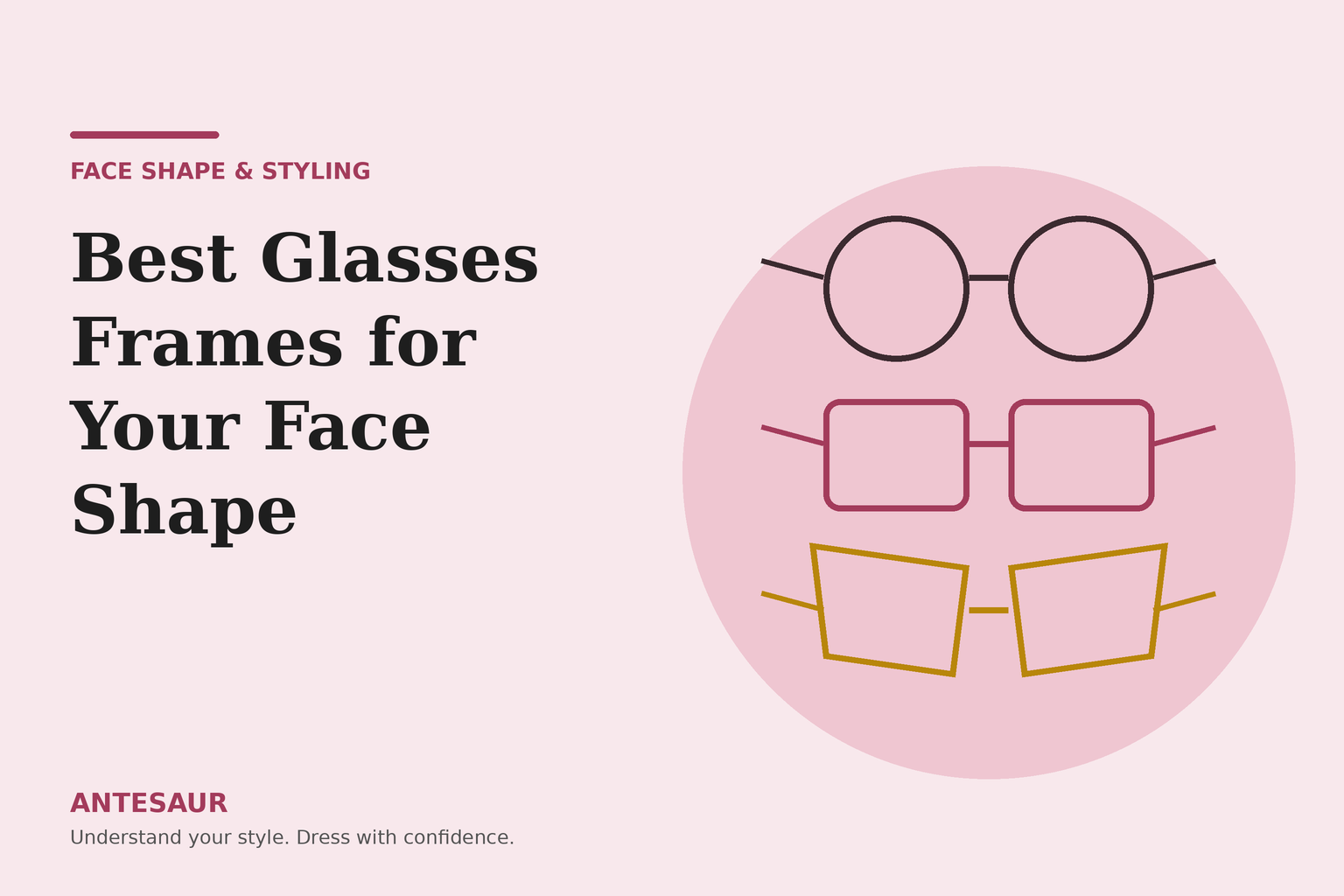
- Round: Circular lenses, often vintage or artistic in feel.
- Square: Boxy, strong lines with sharp corners.
- Rectangular: Wider than tall, clean and professional.
- Oval: Soft, rounded edges, gentle and classic.
- Aviator: Teardrop-shaped lenses with a thin metal frame, popular for sunglasses.
- Wayfarer: Slightly trapezoid shapes with a thicker top, a timeless casual style.
- Cat-eye: Upswept outer corners, mostly worn by women.
- Browline: Thick top bar with a lighter lower frame, a retro look.
- Geometric: Hexagonal or other multi-sided shapes for a modern look.
- Rimless or semi-rimless: Minimal frames that look light and subtle.
Best Glasses for Oval Faces
Oval faces are well balanced, so most frames suit them. The main aim is to avoid frames that distort the natural proportions.
Good choices:
- Wayfarer and square frames for a bit of structure
- Geometric frames for a stylish look
- Aviators for sunglasses
- Cat-eye frames for women who want a distinctive shape
Be careful with: Frames that are too big, as they may overpower the face. Choose a width that matches the width of your face.
Best Glasses for Round Faces
Round faces have soft curves and equal width and length. Angular frames add definition and make the face look longer.
Good choices:
- Rectangular frames, which add length
- Square frames with sharp edges
- Wayfarers and browline styles
- Geometric frames with angles
- Frames with a high bridge to elongate the face
Be careful with: Very small round frames, which can emphasise roundness. Also avoid extremely thick, heavy frames that hide the face.
Best Glasses for Square Faces
Square faces have strong jawlines and angular features. Softer, curved frames help balance these angles.
Good choices:
- Round and oval frames
- Aviators with curved edges
- Cat-eye frames for a soft, elegant look
- Thin frames in light colours
Be careful with: Boxy, sharp-cornered frames that repeat the angles of the face. They may look too severe.
Best Glasses for Heart-Shaped Faces
Heart-shaped faces are wider at the forehead and narrow at the chin. The aim is to balance the top and bottom.
Good choices:
- Light, thin frames in metal or rimless styles
- Oval and round frames
- Aviators, which are wider at the bottom
- Frames that are wider at the base than the top
- Light colours that do not weigh down the forehead
Be careful with: Heavy top-heavy frames, like thick browline styles, which can emphasise the wide forehead.
Best Glasses for Oblong (Long) Faces
Oblong faces are longer than they are wide. The aim is to add width and reduce the sense of length.
Good choices:
- Oversized frames with a deeper lens
- Round or square frames with wide lenses
- Wayfarers that add width
- Frames with decorative temples that add visual width
- Low bridge frames to shorten the nose area
Be careful with: Small, narrow frames that make the face look even longer.
Best Glasses for Diamond Faces
Diamond faces have high cheekbones and narrower foreheads and chins. The aim is to soften the cheekbones and add balance at the forehead and chin.
Good choices:
- Cat-eye frames that add width at the brow
- Oval frames that follow the cheek curve
- Rimless or semi-rimless styles
- Browline styles that add emphasis at the top
Be careful with: Narrow, small frames that sit within the cheekbone width and emphasise it.
Quick Reference Table
| Face Shape | Best Frame Styles | Avoid |
| Oval | Wayfarer, square, geometric, aviator | Oversized frames |
| Round | Rectangular, square, wayfarer, geometric | Small round frames |
| Square | Round, oval, aviator, cat-eye | Boxy, sharp frames |
| Heart | Light metal, oval, aviator, rimless | Heavy top-heavy frames |
| Oblong | Oversized, round, wayfarer, deep lenses | Small, narrow frames |
| Diamond | Cat-eye, oval, browline, rimless | Narrow frames |
Choosing the Right Size
Frame size is just as important as frame shape. A perfect shape in the wrong size will look off.
Check the Frame Measurements
Most glasses have three numbers printed on the inner arm, for example 52-18-140.
- The first number (52): The lens width in millimetres.
- The second number (18): The bridge width, which is the gap between the lenses.
- The third number (140): The temple length, which is the length of the arms.
If you already own a pair that fits well, use those numbers as a reference when buying new ones online.
Match Frame Width to Face Width
The outer edge of the frame should be about the same width as your face at the temples, or slightly wider. If the frame is much wider, it will look oversized. If it is narrower, it may press against your temples and look small.
Check Eye Placement
Your eyes should sit roughly in the centre of each lens. If your eyes are too close to the nose side or too far toward the outer edge, the frame is not the right size.
Make Sure the Top of the Frame Follows Your Brow
The top line of the frame should follow the shape of your eyebrows without covering them. Eyebrows that peek out above the frame look natural, while eyebrows that vanish behind the frame can look awkward.
Choosing Frame Colours
Colour plays a big role in how glasses look on you.
- Black: Bold, timeless and works with most skin tones and outfits.
- Tortoiseshell: Warm, classic and versatile. Good for casual and formal looks.
- Brown and dark browns: Soft, friendly and natural.
- Transparent and clear frames: Light and modern, with a subtle effect.
- Gold and silver metal: Light and professional. Gold suits warm skin tones, while silver suits cool skin tones.
- Bright colours: Blue, red, green or pink frames add fun and personality.
When choosing a frame colour, think about your hair, skin tone and wardrobe. If you want your glasses to match your clothes, read our guides on neutral colours every wardrobe needs and best colour combinations for everyday wear.
Frame Materials
- Acetate (plastic): Comes in many colours and patterns. Durable and comfortable.
- Metal: Thin and lightweight. Good for professional looks, though it may need more adjustment.
- Titanium: Very light, strong and often hypoallergenic, but usually more expensive.
- TR90 and other flexible plastics: Light and flexible, good for sports and everyday use.
- Wood or horn: Unique and stylish, though less common.
Choose a material that suits your lifestyle, skin sensitivity and budget.
Glasses and Your Personal Style
Glasses are part of your overall look, so they should match your style. A minimalist might choose thin metal frames or clear acetate. A streetwear fan might prefer bold wayfarers or geometric shapes. A classic dresser might choose tortoiseshell round or rectangular frames. If you are still working out your direction, our article on minimalist vs streetwear vs classic style can help.
You can also match your glasses with your hairstyle. For example, a bold fringe may need slightly thinner frames, while a very short crop can carry thicker, bolder frames. For hairstyle ideas, see our guide on best hairstyles for every face shape.
Sunglasses vs Prescription Glasses
The same face-shape principles apply to both, but sunglasses often allow bolder choices. Since they are worn mostly outdoors, you can go bigger or more dramatic. Aviators, oversized round frames and cat-eye shades are very popular.
For daily prescription glasses, comfort and practicality are more important. Pick lightweight frames, check how they sit on your nose and make sure they do not slide when you look down. Also consider lens thickness, since high-powered lenses may look better in smaller, rounder frames.
Practical Tips Before You Buy
- Try before you buy. If possible, visit a store and try several frames, even if you plan to order online.
- Take photos. Photos help you see how frames look from outside.
- Check comfort. Frames should not pinch behind the ears or sit too tight on the nose.
- Think about your daily life. If you wear a helmet, mask or cap often, choose slim temples.
- Ask the optician about adjustments. Small bends in the frame can make a big difference to comfort.
- Consider anti-glare and blue-light coatings. These can help if you spend long hours on screens.
- Do not rush. Glasses last for years, so it is worth spending time on the right pair.
Common Mistakes When Choosing Glasses
- Choosing frames only by trend. Popular frames may not suit your face.
- Ignoring size. Frames that are too big or too small look awkward.
- Matching the shape of the face instead of contrasting it. For example, round frames on a round face may exaggerate roundness.
- Forgetting about comfort. If the frames hurt after an hour, they will not stay on your face.
- Not checking in different lighting. Frames can look different indoors and outdoors.
- Skipping professional adjustments. A small tweak at the optician can improve fit.
For other styling mistakes to avoid, see our list of fashion mistakes most people make.
Frequently Asked Questions
What glasses suit a round face?
Rectangular, square and angular frames often suit round faces, as they add structure and make the face look longer.
What glasses suit a square face?
Round, oval and softly curved frames, such as aviators, help soften strong angles.
Are oversized glasses a good choice?
They can look stylish, especially on oblong and oval faces, but make sure they are not too heavy for your face and that they sit comfortably.
Can men and women wear the same frames?
Yes. Many frame styles, including wayfarers, round frames and aviators, work well for all genders. Some shapes, such as cat-eye, are more common in women’s styles, but there are no strict rules.
How do I know if my glasses are the right size?
The frame should be about as wide as your face, your eyes should sit near the centre of the lenses and the glasses should stay comfortably in place without sliding or pinching.
Final Thoughts
Choosing glasses based on face shape makes the process much easier. Contrast your natural lines, check the size carefully, pick a colour that suits your skin and wardrobe, and always put comfort first.
Do not be afraid to experiment. A new pair of frames can change how you look and feel every day. Use this guide as a starting point, try on a few options and trust the pair that makes you feel confident. To explore more styling ideas, visit our Face Shape & Styling section.