Look at a well-dressed person and you will often notice a small detail: their trousers end at exactly the right spot. Not too long, not too short, and not bunching up awkwardly over the shoes. Trouser length is one of those quiet details that people rarely discuss, yet it has a huge effect on how polished, tall and balanced you look.
Most people never think about hem length when buying trousers. They check the waist, try the length in the changing room and move on. As a result, many wardrobes are full of trousers that are slightly too long or too short. In this guide, we explain everything about trouser length, including the different types of breaks, how to choose the right length for your body and shoes, and when to visit a tailor.
Why Trouser Length Matters So Much
Your trousers cover roughly half of your visible body. The point where they stop decides how long your legs appear, how your shoes look and how clean your silhouette feels.
- Too long: Extra fabric gathers around the ankles, which makes legs look shorter and gives a sloppy impression. It also damages the hem as it drags on the floor.
- Too short: If trousers end awkwardly above the ankle, they can look like you have outgrown them, unless the cropped look is intentional.
- Just right: Clean lines make you look taller, sharper and more confident.
This is also one of the most common problems we see in outfits. If you want to know more about similar details, read our article on common fit mistakes that ruin an outfit.
Understanding the “Break”
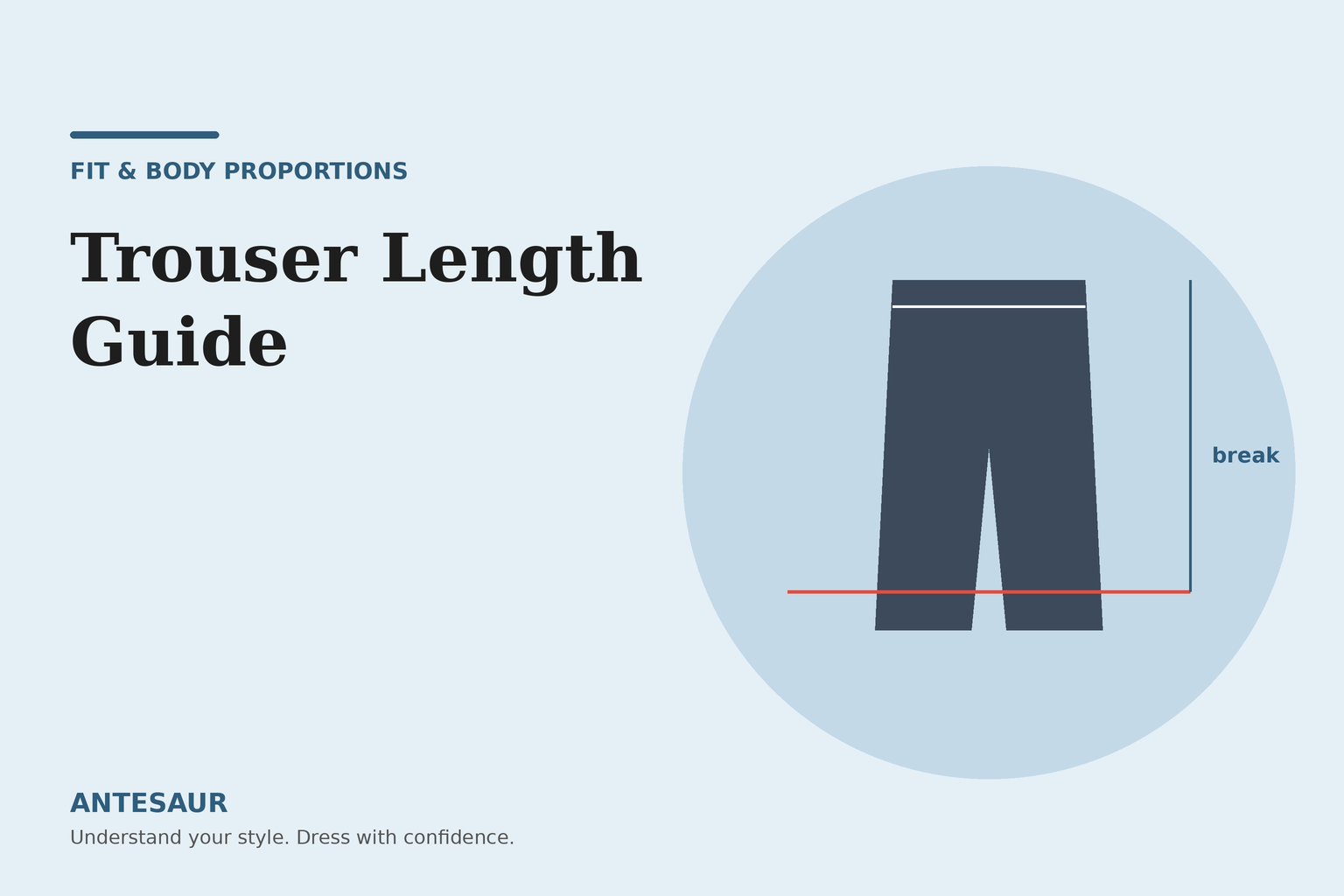
In tailoring, the “break” is the small fold or crease that forms at the front of your trousers where the fabric meets your shoe. The amount of fabric resting on the shoe determines the type of break. There are four main types.
No Break
With a no-break hem, the trouser front just kisses the top of the shoe or stops slightly above it, so there is no fold at all. The line is clean and modern.
Best for: Slim and tapered trousers, formal wear, fashion-forward looks.
Pros: Shows the shoes, looks sharp and elongates the leg.
Cons: Needs precise tailoring. If you sit down, the hem rises and may reveal ankles or socks.
Slight Break
A slight break has a very small fold in the fabric. The hem touches the shoe lightly and creates a gentle crease.
Best for: Most men and most trousers. It is the most versatile and widely flattering option.
Pros: Neat, modern and still comfortable. Works for both formal and smart casual outfits.
Cons: None for most people, as long as it is hemmed accurately.
Medium Break
With a medium break, the fabric rests on the shoe and forms one clear fold at the front.
Best for: Classic business wear, straighter or wider trousers, traditional looks.
Pros: Comfortable and conservative. It stays presentable even when you move or sit.
Cons: Can make short people look a little shorter if the trousers are narrow.
Full Break
In a full break, the trousers are long and create a deep fold, covering part of the shoe laces or top.
Best for: Very relaxed or vintage-inspired looks, wide-leg trousers and some streetwear styles.
Pros: Relaxed and comfortable.
Cons: Looks sloppy in most situations, shortens the leg line and can damage the hem.
Trouser Length Guide by Style
Different trouser types suit different lengths. Here is a simple breakdown.
Formal Trousers and Suit Pants
Aim for a slight break or no break. The hem should end near the top of the shoe. If you wear lace-up leather shoes, the trouser should skim the shoe without stacking. Always check the length while wearing the shoes you intend to pair.
Chinos
Chinos are versatile. For a modern, smart casual look, choose a slight break or a clean no-break hem. You can also wear them cuffed or slightly cropped in warm weather. Our guide to how to build a smart casual wardrobe shows how to style chinos in more outfits.
Jeans
Jeans give you many options.
- Full-length jeans with a slight break: The classic option.
- Slightly cropped jeans: Ending just above the ankle, ideal with sneakers or loafers.
- Stacked jeans: A looser streetwear look where fabric gathers over the shoe. Make sure it looks intentional and not accidental.
- Cuffed jeans: A neat, simple roll of one or two folds, often paired with sneakers.
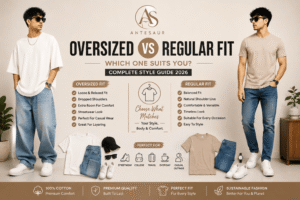
If you love baggy or oversized silhouettes, our article on oversized vs regular fit explains how to balance them.
Cargo Pants and Joggers
Cargos can be worn full-length with a small stack or slightly shorter to show sneakers. Joggers usually have an elastic cuff, so the length should end at or just above the ankle. If they bunch too high on the calf, they look short, and if they pool at the floor, they look sloppy.
Wide-Leg Trousers
Wide-leg trousers work best when they are long enough to almost touch the floor, especially with heels or platform shoes. Shorter wide-legs can look awkward unless they are deliberately cropped to show off shoes.
Cropped and Ankle-Length Trousers
Cropped trousers end between the calf and the ankle bone. They look best when the hem is clean and the shoes are slim, such as loafers, minimal sneakers or flats. Avoid chunky socks that break the line.
Shorts
For shorts, the sweet spot is usually just above the knee or at mid-thigh, depending on your height and comfort. Longer shorts that fall past the knee can shorten the leg line, especially for shorter people.
How Trouser Length Interacts with Height
The same hem can look different on different people.
If You Are Short
- Aim for no break or a slight break to avoid extra fabric.
- Choose slim or straight fits instead of very wide legs.
- Match shoe and trouser colour to create a continuous line.
- Avoid cuffs that are too thick.
Also, If you want more ideas, read our complete guide on best outfits for short height.
If You Are Tall
- Do not hem too short. Slightly longer hems balance a long frame.
- A slight or medium break can look good.
- Wider hems and stacked fabric work well on taller bodies.
- Choose trousers with enough length in the original cut.
If You Are Average Height
You have freedom to try all styles. A slight break works for almost everything, while cropped or stacked looks can be used for variety.
How Shoes Affect Trouser Length
Shoes change the right hem length, so choose trousers with your regular footwear in mind.
- Sneakers: Slightly shorter hems look good, so the shoe stays visible. Low-profile sneakers suit cropped and slim trousers.
- Loafers and derbies: A slight break or no break keeps the lines tidy.
- Boots: A slightly longer hem or a gentle stack looks natural. For slim trousers, you can also wear them over the boot.
- Heels: Trousers can be longer, often almost touching the floor, to create a long leg line.
- Sandals: Cropped or ankle-length trousers suit sandals best.
Always try on trousers with the type of shoe you will wear most.
How to Check If Your Trousers Fit Properly
Use this quick checklist in front of a mirror.
- Stand straight with your shoes on. Look at the front hem and note how much fabric touches the shoe.
- Check the back. The back hem should be slightly longer than the front and end about halfway down the heel.
- Sit down. Make sure the hem does not ride too high.
- Walk around. The hem should not drag, bunch up or catch under your shoe.
- Look in the mirror from the side. The hem should hang straight, not twist or flare unevenly.
If any of these fail, consider hemming.
Hemming Basics: What a Tailor Can Do
A tailor can adjust the length of nearly any trouser, but you should know the common options.
Standard Hem
The tailor folds and stitches the bottom edge. This is the most common option and works on most trousers.
Original Hem Preservation
For jeans, many tailors can keep the original worn hem while shortening the leg by cutting above it and reattaching. This keeps the faded look and is popular with raw denim lovers.
Cuffed Hem
Some trousers, especially chinos and formal pants, can have a cuff added. Cuffs add weight and a classic feel. They work best with straight or slightly tapered legs and suit people who are not very short.
Taper Adjustments
A tailor can also narrow the leg opening so it sits better over shoes. Tapering can change the whole look of a pair of trousers, but it should be done carefully so that the proportions stay balanced.
Costs and Timing
Hemming is usually inexpensive compared with the effect it has. Many tailors finish simple hems within a day or two. Always have the tailor mark the length while you wear your usual shoes.
DIY Hemming Tips
If you are comfortable with sewing, you can hem trousers at home, but be careful.
- Use pins or tailor’s chalk to mark the length while wearing shoes.
- Measure both legs separately, because they are not always equal.
- Cut slightly longer than needed, since you can trim later.
- Use hem tape for a quick, no-sew option on casual trousers, though it is less durable.
- Press the hem with an iron for a clean finish.
If the trousers are expensive or complicated, such as suit trousers, it is safer to visit a tailor.
Common Trouser Length Mistakes
- Letting fabric pool around the ankles. It shortens the leg and looks careless unless it is a deliberate stacked style.
- Wearing trousers that are too short by accident. Awkward half-cropped lengths look like a mistake.
- Ignoring shoes. A hem that suits sneakers may look short with formal shoes.
- Uneven hems. Check both legs, because sometimes the tailor or the trousers are uneven.
- Mixing cuffs with the wrong fit. Very wide cuffs can overpower a slim leg.
- Forgetting to try sitting. Trousers that look good standing may ride up when you sit.
You can find more everyday errors in our article on fashion mistakes most people make.
Quick Reference Table
| Trouser Type | Best Length | Notes |
| Formal trousers | Slight or no break | Check with formal shoes |
| Chinos | Slight break or cropped | Great with loafers or sneakers |
| Slim jeans | Slight break or ankle-length | Pair with sneakers |
| Straight jeans | Slight to medium break | Classic and balanced |
| Wide-leg trousers | Near floor length | Best with heels or chunky shoes |
| Cargo pants | Light stack or ankle-length | Depends on style |
| Joggers | Ankle-length | Avoid bunching on the calf |
| Shorts | Above knee to mid-thigh | Adjust to height |
Frequently Asked Questions
How long should trousers be?
For most trousers, the hem should lightly touch the top of your shoe with a slight break or no break at all. The exact length depends on style, shoes and personal preference.
What is the best trouser break for most people?
A slight break is the most versatile. It looks neat, modern and works for both formal and casual outfits.
Can I wear cropped trousers if I am short?
Yes, as long as the hem ends at a flattering point, near the ankle bone, and you wear slim shoes in a similar colour. Avoid very short crops that cut the leg line sharply.
Should jeans touch the floor?
Generally no. Jeans that drag on the floor get damaged and look untidy. A slight break or a clean ankle-length hem works better, unless you prefer a deliberate stacked streetwear look.
How much does hemming change the look of an outfit?
A lot. Correct hemming can make you look taller, make clothes look more expensive and give your outfit a clean, professional finish.
Final Thoughts
Trouser length may seem like a tiny detail, but it quietly shapes your entire outfit. A clean hem lengthens your legs, shows off your shoes and makes even simple clothes look carefully chosen. Take a few minutes to check your current trousers in a mirror. Look at the break, test the length with your usual shoes and visit a tailor for any that need adjustment. With this small effort, you will notice a clear difference in how you look and feel. For more guidance on proportion and fit, visit our Fit & Body Proportions section.