If you are on the shorter side, you have probably heard confusing advice. Some people say never wear oversized clothes. Others say avoid stripes, avoid long coats, avoid wide pants. The result is that many short people end up believing that their style choices are very limited.
The truth is much more encouraging. Being short does not restrict you. It simply means you need to understand proportion, which is how different parts of your outfit relate to each other and to your body. Once you learn a few principles, you can wear almost anything and look balanced, confident and well dressed.
In this guide, you will learn how to dress for short height, which fits and colours work best, what to wear for men and women, and which mistakes to avoid. Everything here is practical and easy to apply.
Understanding Proportion: The Key Idea
Proportion is the relationship between your torso, your legs and the length of your clothes. When people look “tall” in photos, it is often because their outfit creates long, unbroken lines, especially from the waist down.
For short people, the goal is usually not to look dramatically taller. It is to create a balanced, streamlined look where nothing overwhelms your frame. This means choosing clothes that fit properly, avoiding extra bulk and creating visual length wherever possible.
Think of it as managing three zones: the shoulders and chest, the waist, and the legs. If these zones look balanced, your height stops being the main thing people notice.
General Style Principles for Short Height
Prioritise Fit Above Everything
Fit matters more for short people than anyone else. Clothes that are too long, too loose or too bulky can make you look smaller and swallow your frame. Shoulder seams should sit exactly at the edge of your shoulders. Sleeves should end at the wrist. Trousers should be hemmed to the right length.
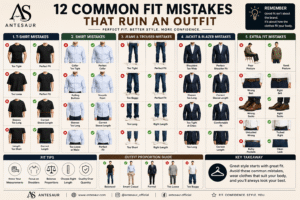
Many ready-made clothes are cut for average heights, so small alterations help a lot. Our article on common fit mistakes that ruin an outfit covers the details to watch for.
Create Vertical Lines
Vertical lines draw the eye up and down, which creates an impression of length. You can create them through:
- Open jackets, cardigans and blazers worn unbuttoned
- Long necklaces or thin chains
- Vertical stripes or pinstripes
- Single-colour outfits with no strong break at the waist
- Long, narrow lapels
Keep Your Outfit Colours Connected
Wearing similar tones from top to bottom makes the body look like one long line. A tone-on-tone outfit, such as navy shirt with navy trousers, or beige top with beige trousers, creates a continuous look. You do not need to be fully monochrome. A top and bottom in close shades work just as well.
If you love colour, keep your shoes close to your trouser colour. This lengthens the leg line.
Choose the Right Proportions in Layers
Layers can add bulk. Instead of heavy, boxy jackets, choose slim or medium-fit layers that follow your shape. Cropped or hip-length jackets suit short people because they do not cut the body in half.
Best Outfits for Short Men
Tops
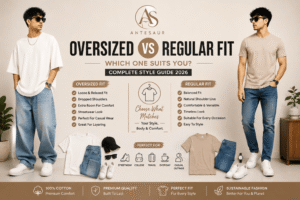
- Fitted or regular-fit T-shirts: Avoid very oversized tees that hang down to your thighs. If you like a relaxed look, choose a slightly boxy fit with a shorter length. See our comparison of oversized vs regular fit for guidance.
- Shirts with the right length: The hem should end around the middle of your zip or just below the belt line. Long shirts shrink your leg length visually.
- Polo shirts: Neat, structured and flattering when the fit is right.
- Short-sleeve shirts and tees: Choose sleeves that end mid-bicep, not near the elbow.
Bottoms
- Slim or straight-fit trousers: Very baggy trousers add bulk. Slim, tapered or straight-fit styles help your legs look longer.
- Mid-rise or high-rise waist: A slightly higher rise makes your legs appear longer.
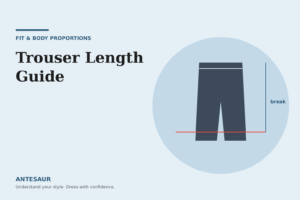
- Clean hem with little or no break: Trousers should just touch the shoe or end slightly above. Extra fabric at the bottom makes legs look shorter.
- Dark jeans: Indigo and black jeans have a slimming, lengthening effect.
If you are deciding between cuts, read our guide on slim fit vs relaxed fit.
Jackets and Layers
- Short bomber jackets: They end around the waist and keep proportions neat.
- Slim blazers: Choose structured shoulders with a trimmed, not boxy, shape.
- Shorter overcoats: Knee-length or slightly above is better than very long coats.
- Open overshirts: Wear them open over a tee to create a vertical line.
Footwear
- Minimal sneakers: Clean, low-profile white or neutral sneakers look sharp.
- Loafers and derbies: Slim, streamlined shapes are better than chunky ones.
- Shoes that match trousers: This extends the leg line.
- Hidden-height options: A slight sole or heel lift is fine if comfortable, but never at the cost of comfort or posture.
Sample Outfits for Short Men
- Casual: Fitted grey tee + dark straight jeans + white sneakers.
- Smart casual: Light blue shirt tucked into beige chinos + brown loafers.
- Layered: Plain tee + open olive overshirt + black jeans + neat boots.
- Formal: Slim navy suit with trousers properly hemmed + white shirt + black shoes.
Best Outfits for Short Women
Tops
- Fitted or cropped tops: They highlight the waist and keep the torso from looking long.
- V-necks and scoop necks: These open up the neckline and create a lengthening effect.
- Tucked-in shirts: Tucking defines the waist and extends the leg line.
- Avoid overly long tunics: Extremely long tops can cut your leg length.
Bottoms and Dresses
- High-waisted jeans and trousers: They create the illusion of longer legs. Pair with a tucked top.
- Straight or slightly flared legs: A straight-leg or gentle bootcut style balances the body.
- Midi skirts at the right length: Aim for a length that ends just below the knee or at the narrowest part of your calf. Very long maxi skirts can overwhelm a short frame unless properly fitted.
- Mini and knee-length dresses: These show more leg and create a longer line.
- Wrap dresses: The V-neckline and defined waist are flattering.
Layers and Outerwear
- Cropped jackets: Ideal with high-waisted bottoms.
- Belted blazers and coats: Belts define the waist and shape.
- Long open cardigans: Used carefully, they create a vertical line.
Footwear
- Pointed-toe flats and heels: These visually extend the leg.
- Nude or skin-tone shoes: They blend with your skin and lengthen the leg line.
- Block heels and wedges: More comfortable than stilettos, with added height.
- Strappy sandals without ankle straps: Ankle straps can shorten the leg line.
Sample Outfits for Short Women
- Casual: Tucked-in white tee + high-waisted straight jeans + white sneakers.
- Office: Fitted blouse + high-waisted tailored trousers + pointed flats.
- Dinner: Knee-length wrap dress + block heels + a small bag.
- Ethnic: Straight kurta with matching trousers + juttis in a similar colour.
Colours and Patterns That Work for Short Height
Colours
Tonal dressing is one of the most effective tricks. Wearing similar shades creates a longer visual line. Dark colours such as navy, black and charcoal are slimming, but light neutrals work too if the outfit is consistent.
You can still wear bright colours. Keep one bright piece and balance it with neutrals. A bright top with dark trousers is fine as long as the proportions are neat. For help with mixing shades, read best colour combinations for everyday wear.
Patterns
- Vertical stripes: Elongating and flattering.
- Small prints: Small, delicate patterns suit short frames better than huge bold prints.
- Avoid heavy horizontal stripes: Wide horizontal bands can make the body look wider and shorter, especially in high contrast.
- Be careful with large checks and oversized graphics: They can overpower a smaller frame.
Tucking, Belts and Waistlines
How you handle your waistline changes your proportions.
- Tuck in your top: A tucked-in top shows more leg and shifts the visual midpoint upward.
- Use a belt that matches your trousers: A contrasting belt cuts the body in half. A belt in a similar tone keeps the line smooth.
- Try a half-tuck: For tees and casual shirts, a front tuck gives a relaxed yet balanced shape.
- High-rise bottoms: They raise the waistline and make the legs seem longer.
Mistakes Short People Should Avoid
- Wearing clothes that are too big. Overly loose clothes hide your shape and add volume.
- Trousers that are too long. Fabric piling at the ankles shortens your legs.
- Heavy, bulky layers. Thick jackets or oversized hoodies can overwhelm your frame.
- Cutting the outfit in half. High-contrast belts, long contrast tops and bold colour blocking at the waist reduce height.
- Oversized accessories. Huge bags, massive watches or thick chunky chains can dominate a smaller frame.
- Ignoring tailoring. A tailor can fix hems, sleeves and waistlines cheaply.
For more general errors to avoid, see our article on fashion mistakes most people make.
Quick Wardrobe Checklist for Short Height
If you want a simple starting point, build around these items.
- Well-fitted plain T-shirts in neutral tones
- Slim or straight dark jeans
- Chinos in beige, olive and navy
- A short, neat jacket or bomber
- A fitted blazer
- Minimal sneakers and one pair of loafers or flats
- A belt that matches your shoes and trousers
- A few vertical-line pieces such as open shirts or long pendants
Most of these also appear in our list of wardrobe essentials everyone should own, so you can build a base that works for any height.
Confidence and Posture
No outfit works as well as good posture. Standing tall, relaxing your shoulders and holding your head up changes how clothes sit and how people perceive you. Confidence also shows in how you carry your clothes. Many well-known stylish people are short, and they look great because they wear clothes that fit, move with purpose and feel comfortable.
Frequently Asked Questions
Can short people wear oversized clothes?
Yes, but carefully. Choose pieces that are slightly boxy with shorter lengths rather than extremely long and baggy. Balance an oversized top with a slimmer bottom, or the other way round.
Are stripes bad for short people?
No. Vertical stripes are actually helpful because they lengthen the body. Avoid very wide, high-contrast horizontal stripes if you want to look taller.
What colours make you look taller?
Tonal or monochrome outfits create the strongest vertical line. Dark shades and closely matched colours from top to toe are very effective.
Should short men wear slim-fit clothes only?
Not necessarily. Slim and straight fits generally look best, but “slim” does not mean tight. Choose a fit that follows your shape without squeezing.
Do heels or lifts help?
They can help in some situations, but they are optional. Comfort and posture matter more. Good fit and proportion create a bigger effect than extra inches.
Final Thoughts
Being short does not limit your style. It simply calls for a thoughtful approach to fit, proportion and colour. Choose clothes that fit your shoulders and length properly, create vertical lines, keep colours connected and avoid excess bulk.
Once you apply these ideas, you will notice that your outfits look cleaner and more intentional. More importantly, you will feel more comfortable and confident in your own skin. Explore our other Fit & Body Proportions guides to learn even more about dressing for your shape.